Category Archives: education
Copyright Isn’t Just for Photographers….
The web makes for an interesting place, and often I get emails from folks asking for suggestions and recommendations on how to best protect their images from being used without their permission (and let’s not mince words here – nobody wants to have their work stolen). Often my response is a bit of this and that, suggesting to make images “web-safe” (i.e. low resolution so they can’t really be re-printed), and to limit the images you publish. (The more you put out there, the more you have to monitor.)
Creating the color video
As promised from last weeks post on Youtube, I promised to share the “how to” on the creation of the little teaser video for transitioning from a black and white photo to color. For those that don’t remember, the video is here:
Free advertising from me today…
Being in Colorado, I am always one of the first to read the latest blogs for the day because East Coasters usually set their publish time to somewhere between midnight and 2am, which means between 10pm and midnight my time, I can catch up on all the news that is going to hit in the morning. (California folks got me beat by an hour…) So, when Scott Kelby’s blog went live a while ago, he was encouraging people to join the Kelby Training website with a video teaser compiled by his chief video guru, Jason Scrivner. It’s a pretty funny … Continue reading
A simple question is never simple…
I am putting together a DIY project that requires a tool which is rather pricey (roughly $50). So in the interests of keeping costs down, I’ve been contacting local glass cutting shops (although that might be telling too much) to see if they have the tool needed for the job. Specifically, the shop needs to have a 3 and1/8″ diamond tipped hole saw for this project. The first words out of my mouth are always: “Hi, my name is Jason and I am trying to find a local shop that can cut a piece of glass for me, but it … Continue reading
Five Tips to Better Photos
With the sudden surge and swell in the blogosphere, Twittersphere and Photosphere over Lightroom 3 hitting the streets (and a nice combo discount is available in the sidebar by the way), let’s not forget that this software is all meant to be doing one thing – letting us get back to the business of taking photos instead of spending our time in our computer. With that in mind, I’m bringing back a popular concept of “Top Tips”. Today, I give you…(drum roll please): “Five Tips to Better Photos” Be Ware of Exposure Values – No matter how good your camera … Continue reading
CHDK is Cool!
So, while debating the intervalometer cost implications for my SLR – I decided to give the Canon CHDK a run for its money. After downloading the CHDK for the A590 and making sure it didn’t break the camera I went out in search of an intervalometer script. I think it’s a VB script, but can’t be sure…nevertheless the results were kind of fun! I tried to include as much info in the teaser as possible, but if anyone has questions on how I did all this, feel free to share your questions (or feedback if you prefer) in the comments … Continue reading
What is it about Bridges?
As the popularity of this theme continues to grow, I am really having more fun culling through my own archives, and have several ideas for actually getting out and shooting even more “themed” sets. However, today, I present to you (courtesy of my wife, who astutely remembered that I shoot a lot of…): Bridges
What is it About Rocks?
Hmmm….seems I have a new series theme going on here – people keep asking when the next series will be posted and are also asking me for specific series sets of photos. I am not sure I have the library of images to accommodate everything, but that just gives me motivation for subject matter whenever I go out shooting again! So, if you have a series that you’d like to see from me – suggest it in the comments or via email! For the time being, here’s another popular set from the library of yours truly: Rocks There’s the latest … Continue reading
5 Tips to Better Landscapes
The most common questions I get here on the blog center around the idea of how to take better pictures. Whether those “better pictures” are better landscapes, or portraits, wildlife or events, everyone wants suggestions on how to approach the practice of taking pictures better. Esoteric and creative considerations aside, there are some fundamental “tricks of the trade” that, by and large, will almost always improve your craft in pretty much any genre. So, today, I thought I would take a moment to share 5 “tricks” I’ve learned that always lead to better landscapes:
Against my better judgement…
For those of you that have been following the blog for a long time (and let me know who you are, because I want to ask why!), you may recall that I used to put out video tutorials on how to do various things inside of Photoshop. After plodding around with that for a while, I came across the gurus of NAPP and realized that several were already doing it, and doing it much better than I ever could. So, rather than re-inventing the wheel, I abandoned the video tutorials in favor of just sharing my “wisdom” in the form … Continue reading
Portrait or Landscape
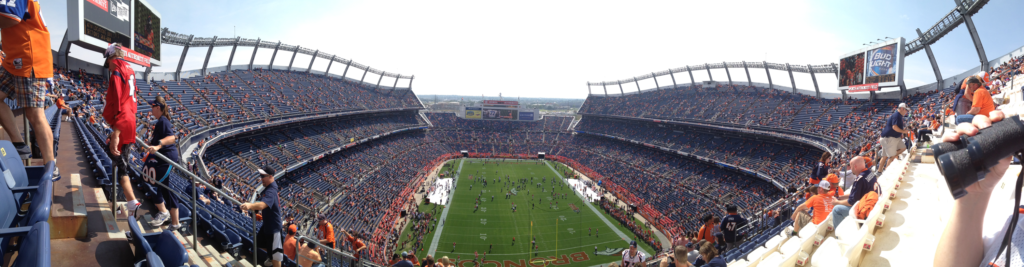
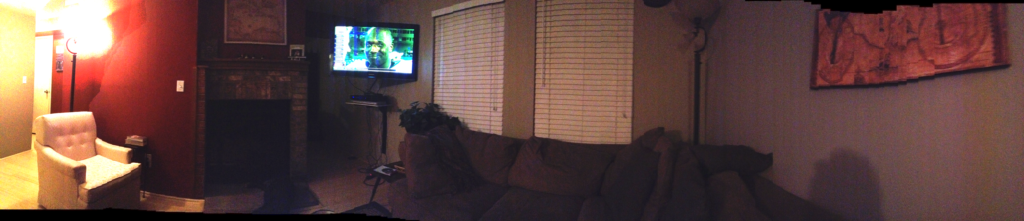
One of the more common questions when it comes to composing images is whether to shoot with the camera oriented in the landscape or the portrait position (horizontal or vertical). As always, the answer is usually along the lines of “it depends…” There are some instances though when a portrait orientation is more conducive and others where a landscape is equally superior. For instance – if you want to have your images published in magazines, portrait mode might work better primarily because that is how magazines are typically laid out. Calendars, on the other hand, because of the opposing orientation, … Continue reading
Hardware Review: Expodisc
It’s been a while since I’ve done a hardware review, and I realized that when the folks at Expo Imaging had sent me the Rayflash to review, I had also received an Expodisc. I know I recorded the video for it, but for some reason it never got published, as the two were meant to be posted back to back. In any case, here is the long-awaited review of the Epodisc from the folks at Expo Imaging: First – what is the Expodisc? It’s simply a disc that defracts light as it passes through your lens in order to determine … Continue reading
Challenge yourself!
The field of photography is a very challenging venue and finding your “voice” in a crowded field can often make the task seem daunting. If you want to challenge yourself in different ways, try something else. Painting, singing, and yes, playing a musical instrument can not only give you a new vision for your photography, but it can get your creative juices going in ways that you may not realize. While you may never become a Picasso, Luciano Pavarotti, or a Mozart, even picking up something you used to do as a kid (or when you were younger for those … Continue reading
I Got a Camera for Christmas – Now What?
With the major holiday of the year behind us, many are proudly wielding new cameras…but many are also asking questions. The most popular question I am getting via emails is something along the lines of: “I got a new ______ for Christmas. Now What?” (Insert your own camera make/model in the blank) The answer to this really depends on what, if anything, you had before the new item made its way into your hands. For simplicity sake, I’ll break the response down to 3 different categories: 1. This is your first “serious” camera, and you are making the foray into … Continue reading
The Best Lens on the Planet!
Imagine the following lens: Can capture wide angle panoramas Can capture detail as close as one inch away. Can capture detail as far away as 300 feet in most cases. Can adjust to extreme low light scenarios in an instant Can adjust to extreme bright light scenarios in an instant Can capture HDR imagery with no post processing Can capture 3-D in the truest sense of the word Can capture images with no pixelation Can capture the widest tonal range available in the visible light spectrum. How much would you spend on these lenses? How much would you protect, treasure, … Continue reading
Software Review: Noise Ninja
With the October Contest underway where the winner will walk away with a fully licensed copy of Noise Ninja, courtesy of the folks at PictureCode, today is a great day to give everyone an idea of what makes this program one of the industry leaders. Since I have talked about the presence of noise in your images before (read that post here), re-hashing the principles of what introduces noise and the artistic benefits and image quality downsides of it in your images isn’t really needed. Instead, here I will simply share some of the interface, and a few before and … Continue reading
Framing your work
Framing your work can be an expensive proposition. Once you get an archival mat, conservation glass, and a custom frame created for your print – you can start spending upwards of $100 for something as small as an 8×10 print. Depending on what it is you want to accomplish though, you could easily be spending as little as $10 per print to mat and frame. Here’s a few things to consider, and some explanations why: Classics are called classics for a reason – they work! I like classic looks, and the museum style frame suits that look – a thin … Continue reading
Five Elements of Control: #4 Context
Have you ever seen something that looks so out of place that it catches your eye? Well catch it with your lens too, because contextual positioning of subjects in interesting or unusual/unexpected areas creates visual interest. This is what I refer to as controlling the context of your subject. So many times I’ve heard people tell me “but how can I change the surroundings?” The answer lies not in changing the surroundings of subjects you want to shoot, butin reversing that idea: find unusual subjects in your given surroundings. Say you are on a photo walk and in a city … Continue reading
Five Elements of Control: #3 Geometry
Earlier this week, we looked at the idea of how contrast/luminance can impact a photo, and that your creative style may tend toward a wider contrast or a narrower contrast. Then, yesterday we looked at how the element of color can impact a photo, both in the sense of how colors can balance and compete against one another, and how bright versus dark colors can play off each other. Since we’re moving from more theoretical to more tangible elements that we want to include in our photos, next up is the geometry of our photos. So, what is geometry? Basically, … Continue reading
Five Elements of Control: #1 Luminance
This week I am doing something special here on the blog – starting a week long series on the subject of Control. We can control our photography in several different ways, and I’ve seen different outlets talk about each of these (and others) to a certain degree, but I’ve not seen many that address all of these elements collectively. Since a discussion of all the elements that go into a photograph would be both exhaustive and likely impossible to touch on everything, it would probably be better to narrow that focus (pardon the pun) on some of the more salient … Continue reading
Dealing with bad pictures
There’s no denying it – we’ve all deleted countless shots both off our camera and off our computers because they were just even to horrible to admit to publicly. And while filtering out the chaffe from the wheat is a good thing, if we don’t learn from our mistakes, we’ll continue to get chaff and never be able to make bread (take great pictures)! So, don’t just look at blurred photos and toss them instantly without thinking. Don’t immediately delete out of focus subject matter, and most importantly don’t blindly drag your less than stellar work to the trash bin. … Continue reading
How to build a star tracker!
Rather than go through another hardware review today, I thought I would share a different kind of hardware with you – the DIY kind! Over the weekend I embarked on a little project on building a device to track stars as they move across the sky (even though it’s really the earth that’s moving and not the sky). Now granted, there are better ways to build star trackers, but many involve electronic motors, are more complex (in my mind anyway), and can get kind of costly (at least from what I’ve read). So, I figured I’d start simple, and go … Continue reading